
What Causes Gas And Bloating? Treatments and Prevention
Almost everyone experiences bloating from time to time, but when it becomes frequent, uncomfortable, or embarrassing, it can start affecting daily life. That heavy, swollen feeling after meals is not always “just bad digestion” and should not always be ignored. Understanding the causes of gas and bloating is the first step towards treating them properly and preventing them from becoming a regular problem.
Gas and bloating can develop for many different reasons, ranging from simple eating habits and food intolerances to constipation, IBS, reflux, or other underlying digestive conditions. That is why repeated bloating should not be approached with guesswork alone. Looking at common triggers, associated symptoms, and the right treatment strategies can help patients move beyond temporary relief and towards better long-term digestive comfort.
Gas and Bloating: Not Always the Same Thing
Patients often use the terms “gas” and “bloating” interchangeably, but they are not the same.
Gas refers to the build-up of air in the digestive tract. This can lead to burping, passing wind, abdominal pressure, or cramping.
Bloating is the sensation of fullness, tightness, or swelling in the abdomen. Sometimes it is linked to gas, but sometimes it is more about gut sensitivity, slowed movement of the bowel, constipation, or even changes in how the gut processes food.
This is why a patient may say, “I feel bloated all the time,” even when there is not actually a large amount of gas present.
Common Everyday Causes of Gas and Bloating
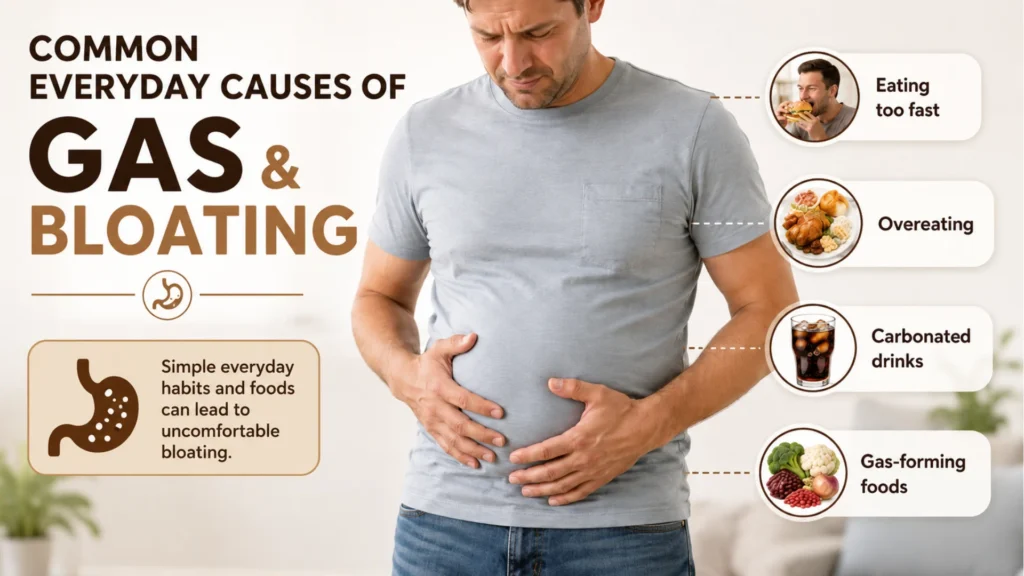
In many cases, bloating is linked to common habits rather than a serious disease. That does not mean it should be dismissed, but it does mean the cause is often manageable once identified.
1. Eating Too Quickly
When you eat quickly, you swallow more air. This can increase belching, abdominal pressure, and discomfort after meals.
Fast eating can also lead to overeating before your brain has time to register fullness, which can make bloating worse.
2. Overeating or Large Meals
Very large meals stretch the stomach and slow digestion. This can leave you feeling heavy, uncomfortable, and overly full for longer than expected.
Rich meals, buffet-style eating, and late heavy dinners are common triggers.
3. Fizzy Drinks and Excess Air
Carbonated drinks introduce extra gas into the stomach. For some people, even sparkling water can worsen symptoms.
Chewing gum, drinking through straws, and frequent sucking on sweets can also increase swallowed air.
4. Constipation
One of the most overlooked triggers of bloating is constipation. If stool is sitting in the bowel for longer than it should, it can lead to abdominal fullness, trapped gas, and discomfort.
Many patients focus on “gas” when the real issue is actually incomplete or infrequent bowel movements.
5. Certain Foods That Ferment More Easily
Some foods are more likely to produce gas as they are digested, especially in sensitive individuals.
Common examples include:
- Beans and lentils
- Onions and garlic
- Cabbage and cauliflower
- Broccoli
- Milk if lactose is not well tolerated
- Artificial sweeteners such as sorbitol
- Large amounts of fruit in some patients
This is often part of what causes bloating and how to treat it in a practical, real-life sense. It is not always about “unhealthy food.” Sometimes, even nutritious foods can trigger symptoms if the gut is sensitive.
When Bloating May Be Linked to an Underlying Digestive Condition
If bloating is frequent, severe, or comes with other symptoms, it may point to a more specific digestive issue.
IBS (Irritable Bowel Syndrome)
IBS is one of the most common causes of chronic bloating. Patients may also notice cramping, altered bowel habits, urgency, constipation, or diarrhoea.
Food Intolerances
Lactose intolerance and fructose intolerance are common examples. These can lead to bloating, gas, loose stools, or discomfort after certain foods.
Reflux and Indigestion
Some people with upper abdominal bloating actually have indigestion, acid reflux, or delayed stomach emptying rather than lower bowel gas.
Coeliac Disease
This is an important condition that should not be missed. Ongoing bloating, diarrhoea, fatigue, weight loss, or nutritional deficiencies may need further assessment.
Small Intestinal Bacterial Overgrowth (SIBO)
In some patients, excess bacteria in the small intestine may contribute to bloating, gas, and food-related symptoms.
Constipation-Predominant Gut Dysfunction
Even when bowel motions happen daily, incomplete emptying can still cause bloating.
Practical Ways to Treat Gas and Bloating
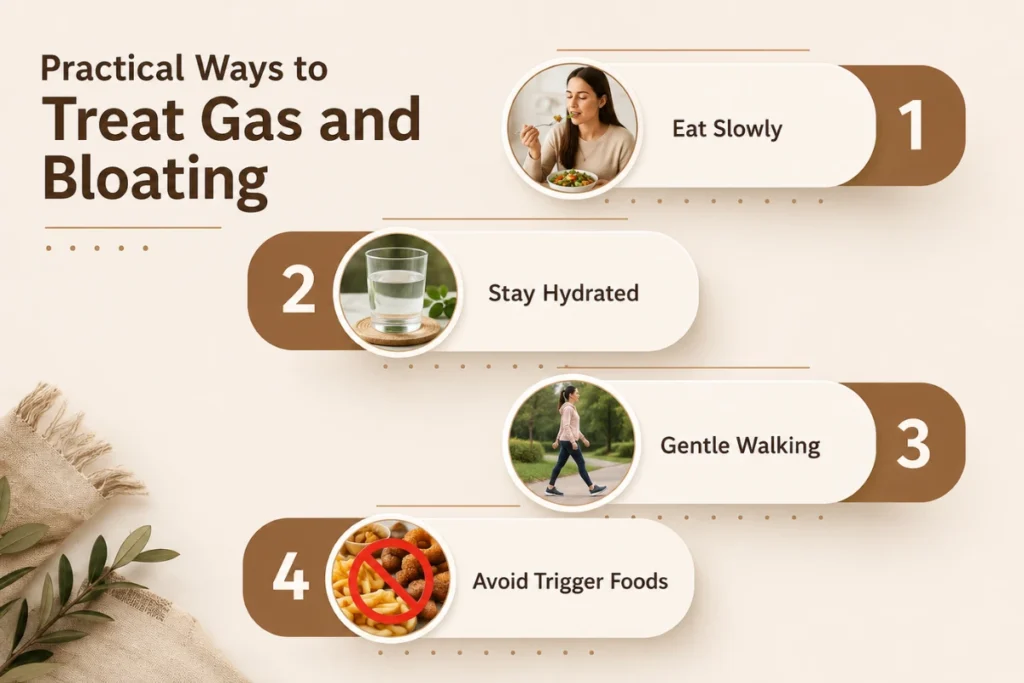
There is no single solution for everyone because the right treatment depends on the cause. However, many patients improve significantly with a few focused changes.
Slow Down at Mealtimes
Eating more slowly can reduce swallowed air and help digestion feel less rushed.
Try to:
- Sit down properly for meals
- Chew thoroughly
- Avoid talking while eating quickly
- Stop before feeling overly full
Review Trigger Foods Without Becoming Overly Restrictive
You do not need to remove every possible trigger at once. It is often better to notice patterns.
Ask yourself:
- Does bloating happen after dairy?
- Is it worse after large meals?
- Do certain vegetables trigger it more than others?
- Is it linked to constipation?
This is often more useful than random food elimination.
Improve Bowel Regularity
If constipation is contributing, treating that often improves bloating more than anything else.
Helpful steps include:
- More water
- Gradual fibre intake
- Daily walking
- Regular toilet routine
- Avoiding the habit of ignoring the urge to open the bowels
Helpful Treatment Options Depending on the Cause
Several gas and bloating treatments may help, depending on what is driving the symptoms.
These may include:
- Dietary adjustments
- Managing constipation
- Reducing fizzy drinks and artificial sweeteners
- Short-term use of peppermint oil in some IBS patients
- Reviewing lactose or FODMAP triggers if appropriate
- Probiotics in selected cases
- Prescription treatment for IBS, reflux, or dyspepsia is contributing
- Further tests to determine if symptoms are persistent or unexplained
Treatment should always be guided by the pattern of symptoms, not just the symptom itself.
Simple Prevention Strategies That Work
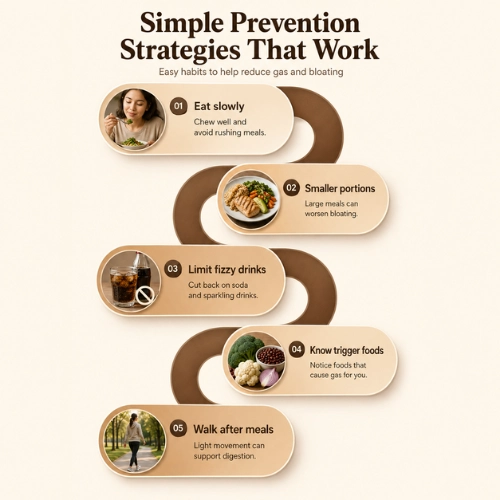
For many patients, prevention is more effective than reacting after every bloating episode.
If you want to know how to prevent gas and bloating, focus on everyday habits that reduce the chance of the gut becoming overloaded or irritated.
Practical strategies include:
- Eat smaller portions
- Avoid eating too quickly
- Limit excessive fizzy drinks
- Reduce very greasy meals
- Stay hydrated
- Keep bowel movements regular
- Be mindful of lactose if it triggers symptoms
- Avoid frequent overeating during social events or travel
- Manage stress, especially if you have IBS
Many patients also ask about remedies for abdominal gas and bloating at home. Gentle walking after meals, warm fluids, avoiding lying down straight after eating, and temporarily choosing simpler meals can all help when symptoms flare.
When Bloating Should Not Be Ignored
Most bloating is not serious, but some patterns deserve proper medical review.
Please seek assessment if bloating is:
- New and persistent
- Associated with weight loss
- Accompanied by vomiting
- Linked to blood in the stool
- Causing severe pain
- Worsening progressively
- Associated with anaemia
- Happening alongside a major change in bowel habit
These symptoms need proper evaluation rather than self-treatment alone.
Conclusion
Gas and bloating are common symptoms, but they are not always as simple as “just trapped wind.” In some cases, the cause may be straightforward, such as eating too quickly or constipation, while in others it may point to IBS, food intolerance, reflux, or another digestive issue that needs closer attention. Understanding what causes bloating and how to treat it starts with recognising the pattern rather than repeatedly reacting to the discomfort alone.
Persistent bloating or abdominal gas often requires more than simple symptom relief, particularly when the pattern becomes frequent or disruptive. Dr Neil, an experienced Gastroenterologist in Dubai, offers personalised assessment to help clarify the cause and guide the right next steps. Book an appointment.