
FODMAP Diet: A Practical Guide for Digestive Health Relief
Many people with bloating, cramping, wind, or unpredictable bowel habits are told to “watch what they eat,” but that advice can feel vague and frustrating. When symptoms keep returning, it helps to have a clearer framework rather than endless guesswork. A low FODMAP diet guide can be a useful starting point for understanding whether certain carbohydrates may be triggering your digestive symptoms.
The low FODMAP approach is not designed as a permanent restrictive diet, but as a structured way to identify foods that may be contributing to symptoms such as bloating, abdominal discomfort, diarrhoea, or constipation. When used correctly, it can help patients better understand their own digestive triggers, reduce unnecessary food avoidance, and move towards a more personalized long-term eating pattern that supports both symptom control and nutritional balance.
What Does FODMAP Actually Mean?
FODMAP is a medical term used to describe a group of short-chain carbohydrates that can be poorly absorbed in the small intestine. When these carbohydrates are not absorbed properly, they travel further into the gut, where they draw in water and are fermented by gut bacteria.
This can lead to symptoms such as:
- Bloating
- Excess wind
- Abdominal pain or cramping
- Diarrhoea
- Constipation in some cases
- A sense of urgency after eating
FODMAP stands for:
- Fermentable
- Oligosaccharides
- Disaccharides
- Monosaccharides
- Polyols
It sounds technical, but the practical meaning is simple: some healthy everyday foods can trigger digestive symptoms in people with a sensitive gut.
Why the FODMAP Diet Can Be Helpful
The low FODMAP approach is most commonly used in patients with IBS, but it can also be relevant in some people with chronic bloating or food-related digestive discomfort. It is not a “cure” for IBS, and it is not intended to become a permanent restrictive diet.
Instead, it is a short-term structured method to identify whether certain foods are worsening symptoms. If done properly, it can reduce confusion and help you understand your gut more clearly.
For many patients, the FODMAP diet for digestive relief is useful because it replaces random food elimination with a more evidence-based process. Rather than cutting out everything, it focuses on specific food groups that are more likely to cause fermentation and symptom flare-ups.
Common High FODMAP Foods That May Trigger Symptoms
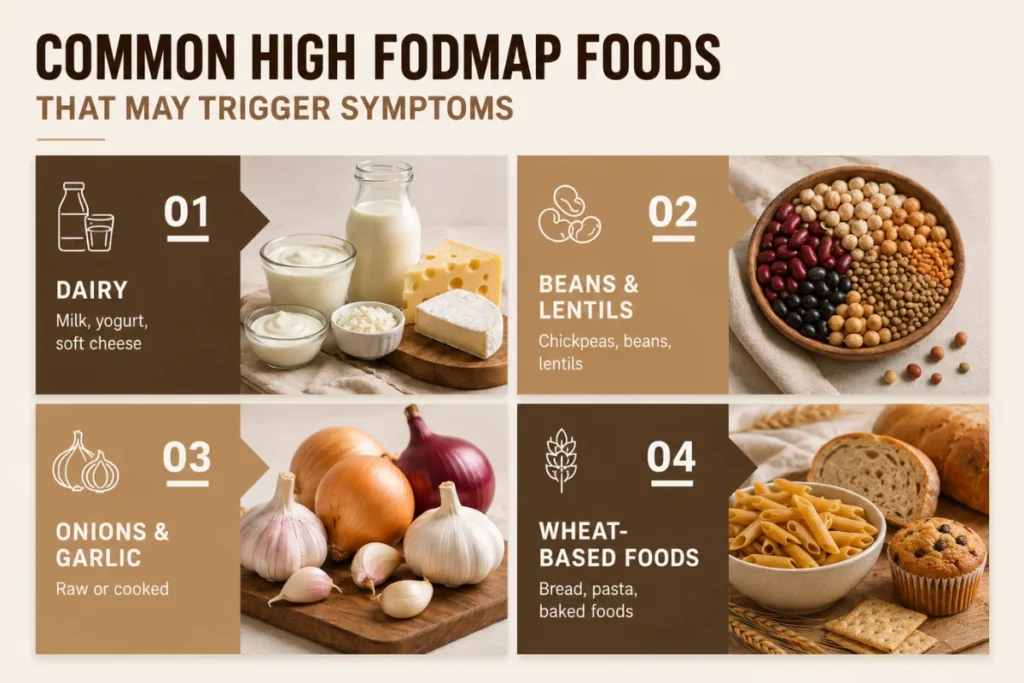
Many high FODMAP foods are otherwise healthy, which is why patients often feel confused when they seem to react to them.
Common examples include:
Fruits
- Apples
- Pears
- Mango
- Watermelon
- Cherries
Vegetables
- Onion
- Garlic
- Cauliflower
- Mushrooms
- Asparagus
Dairy
- Milk
- Soft cheeses
- Ice cream
- Yoghurt (depending on lactose content)
Grains and legumes
- Wheat-based bread and pasta
- Chickpeas
- Lentils
- Baked beans
Sweeteners and additives
- Sorbitol
- Mannitol
- Xylitol
- Some sugar-free products
Not every patient reacts to every category. That is why the process matters more than the list itself.
The Three Phases of the Low FODMAP Diet
A lot of people misunderstand this diet because they think it is simply about avoiding certain foods forever. That is not the goal.
1. Elimination Phase
This is the short-term stage where high FODMAP foods are reduced for a limited period, usually around 2 to 6 weeks, depending on symptoms and clinical guidance.
During this stage, the aim is to see whether symptoms such as bloating, pain, diarrhoea, or urgency improve. If they do, that suggests FODMAPs may be contributing.
2. Reintroduction Phase
This is the most important stage, and the one many people skip. Foods are gradually reintroduced in a structured way to see which groups actually trigger symptoms.
For example, you may tolerate lactose but react strongly to polyols, or tolerate wheat in small amounts but struggle with onion and garlic.
3. Personalisation Phase
Once patterns are clearer, the long-term diet becomes broader again. The goal is to include as many foods as possible while avoiding only the ones that genuinely trigger symptoms.
This is where the practical FODMAP diet explained approach becomes most useful. It is not about permanent restriction. It is about learning what your gut can and cannot comfortably handle.
What Can You Eat on a Low FODMAP Plan?
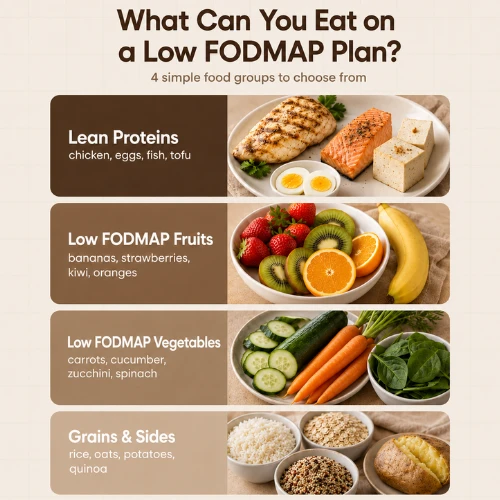
The good news is that there are still many foods that are often well tolerated.
Lower FODMAP fruits
- Bananas
- Blueberries
- Strawberries
- Oranges
- Kiwi
- Grapes
Lower FODMAP vegetables
- Carrots
- Courgette
- Spinach
- Cucumbers
- Aubergine
- Green beans
- Potatoes
Protein sources
- Eggs
- Chicken
- Fish
- Tofu (firm)
- Lean meats
Carbohydrates and grains
- Rice
- Oats
- Quinoa
- Gluten-free pasta
- Sourdough spelt bread in some cases
Dairy alternatives
- Lactose-free milk
- Hard cheeses in moderation
- Lactose-free yoghurt if tolerated
This is why the diet can still be balanced when done properly. It is not a starvation plan, and it should not feel like one.
Important Things Patients Often Get Wrong
One of the biggest mistakes is staying in the elimination phase for too long. This can unnecessarily reduce dietary variety and may affect the gut microbiome over time.
Another common issue is assuming “healthy foods” must always be safe. Foods like apples, onions, garlic, lentils, and cauliflower are nutritious, but they can still be problematic in a sensitive bowel.
The low FODMAP approach is especially relevant as a FODMAP-based strategy for IBS and gut health, but it should not become a source of fear around food. The aim is clarity, not over-restriction.
Practical Tips for Following It Successfully
If you are trying this approach, keep it realistic and structured.
Helpful steps include:
- Plan meals rather than improvising
- Read labels carefully for hidden onion, garlic, or sweeteners
- Keep meals simple during the elimination phase
- Track symptoms without becoming obsessive
- Reintroduce one category at a time
- Avoid testing multiple foods together during reintroduction
- Focus on what you can eat, not only what to avoid
Patients often ask how to follow a low FODMAP diet without feeling overwhelmed. The best answer is to keep it organised, time-limited, and ideally supervised by a healthcare professional or dietitian familiar with IBS and digestive disorders.
When You Should Not Self-Diagnose Everything as IBS
Although the FODMAP diet can be very helpful, it should not be used as a way to ignore warning signs.
If you have any of the following, you should seek a proper medical assessment:
- Unexplained weight loss
- Rectal bleeding
- Anaemia
- Ongoing vomiting
- Symptoms waking you at night
- Family history of bowel cancer or inflammatory bowel disease
- New symptoms starting later in life
These are not typical “just IBS” features and deserve proper investigation before assuming diet alone is the answer.
Conclusion
The low FODMAP diet can be a very effective way to reduce bloating, abdominal discomfort, and unpredictable bowel symptoms when used in the right clinical context.
Rather than becoming a long-term restrictive eating pattern, it works best as a structured method for identifying which foods are genuinely contributing to symptoms. A well-managed FODMAP diet approach can help make digestive health relief more targeted, practical, and sustainable.
For patients in Dubai with ongoing bloating, bowel changes, or suspected food-related digestive symptoms, Dr Neil, the gastroenterologist in dubai can help determine whether FODMAP sensitivity, IBS, or another digestive condition may be contributing.