Nutrition Essentials for Improving Overall Digestive Health
What you eat can influence how well your digestive system functions every day. From bloating and constipation to acid reflux and irregular bowel habits, many common digestive complaints can be affected by food choices and eating patterns. That is why nutrition is an important part of supporting overall digestive health.
Good digestive health is not about following restrictive food trends or cutting out entire food groups without a clear reason. It is about maintaining a balanced diet, getting adequate fibre and fluids, and developing consistent eating habits. Whether someone has a diagnosed digestive condition or is simply looking to support everyday digestive comfort, healthy nutritional habits can contribute to overall wellbeing.
Why Nutrition Matters So Much for Digestive Health
The digestive system does much more than simply break down food. It is responsible for absorbing nutrients, supporting immune function, maintaining bowel regularity, and helping the body eliminate waste efficiently. A diet that lacks important nutrients or is consistently high in heavily processed foods may contribute to digestive discomfort in some people.
Many people think digestive symptoms are always caused by a disease or intolerance. However, everyday eating habits can also influence symptoms such as bloating, constipation, indigestion, and reflux.
A balanced diet also provides nutrients that support the gut microbiome, which is the community of microorganisms that lives in the digestive tract. The gut microbiome plays a role in digestion, immune function, and other aspects of overall health.
Fibre: One of the Most Important Nutrients for Gut Function
Fibre is an important part of a healthy diet and can help support regular bowel movements and digestive function. It can also provide nourishment for beneficial bacteria in the gut.
There are two main types of fibre:
- Soluble fibre, which absorbs water and can help soften stool
- Insoluble fibre, which adds bulk to stool and helps support regular bowel movements
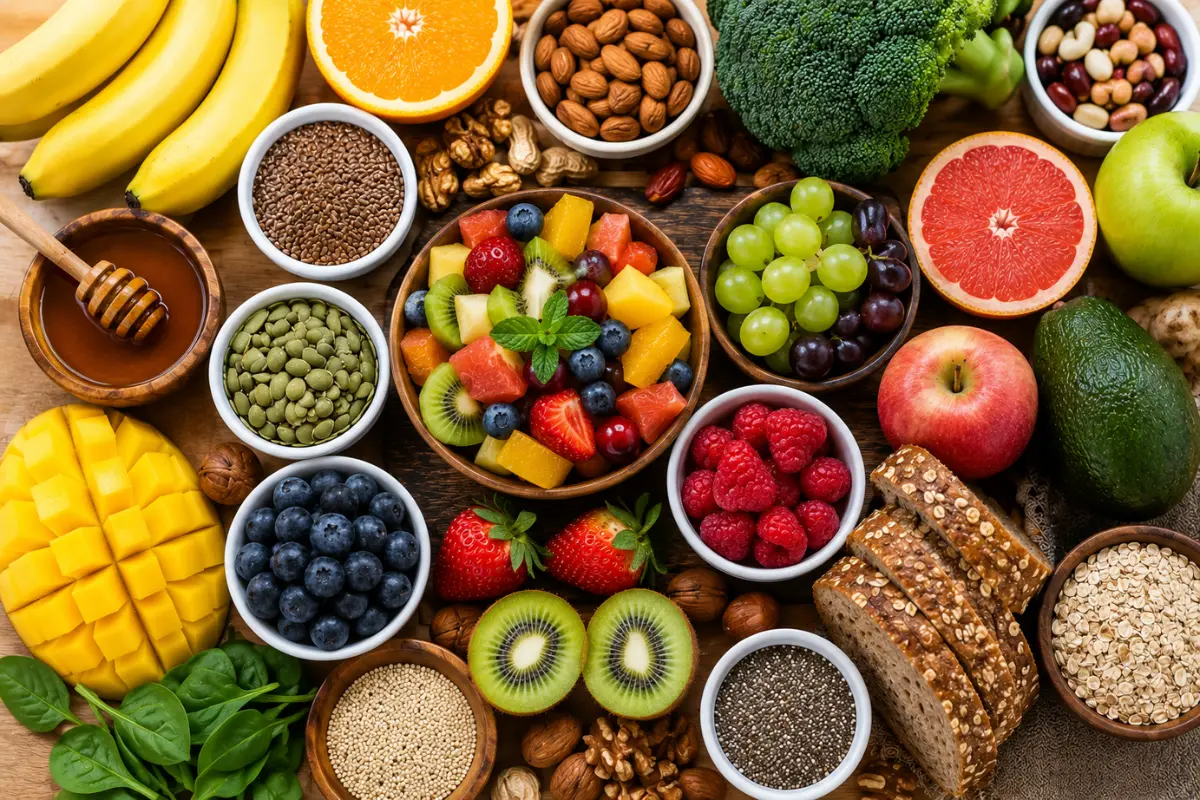
Good sources of fibre include:
- Oats
- Apples
- Pears
- Lentils
- Beans
- Chia seeds
- Vegetables
- Whole grains
However, increasing fibre too quickly can cause gas or bloating, particularly in people with IBS or a sensitive digestive system. Increasing fibre gradually and maintaining adequate fluid intake may help improve tolerance.
Water: Essential for Smooth Digestion

Hydration is an important part of digestive health. Not drinking enough fluids can contribute to harder stools and may make constipation more difficult to manage.
Water helps:
- Support bowel regularity
- Support the normal movement of food through the digestive tract
- Reduce the risk of dehydration-related constipation
- Allow fibre to work effectively
- Support overall digestive function
Increasing fibre without drinking enough fluids may not provide the expected benefits and can sometimes contribute to increased bloating or constipation.
A simple approach is to drink fluids regularly throughout the day rather than trying to consume large amounts at once. Individual fluid requirements can vary depending on factors such as activity level, climate, diet, and medical conditions.
Protein and Healthy Fats Also Play a Role
Digestive health is not only about fibre. Protein is an important nutrient required for tissue maintenance, repair, enzyme production, and overall health. Sources such as fish, eggs, lean poultry, yoghurt, lentils, and tofu can form part of a balanced diet.
Healthy fats are also an important source of energy and help the body absorb certain vitamins. However, large amounts of very fatty, fried, or heavily processed foods may contribute to digestive discomfort in some people, particularly those who experience reflux.
Examples of healthier fat sources include:
- Olive oil
- Avocado
- Nuts and seeds
- Oily fish
Individual tolerance can vary, so foods that consistently trigger symptoms may need to be discussed with a healthcare professional.
The Importance of Gut-Friendly Vitamins and Minerals
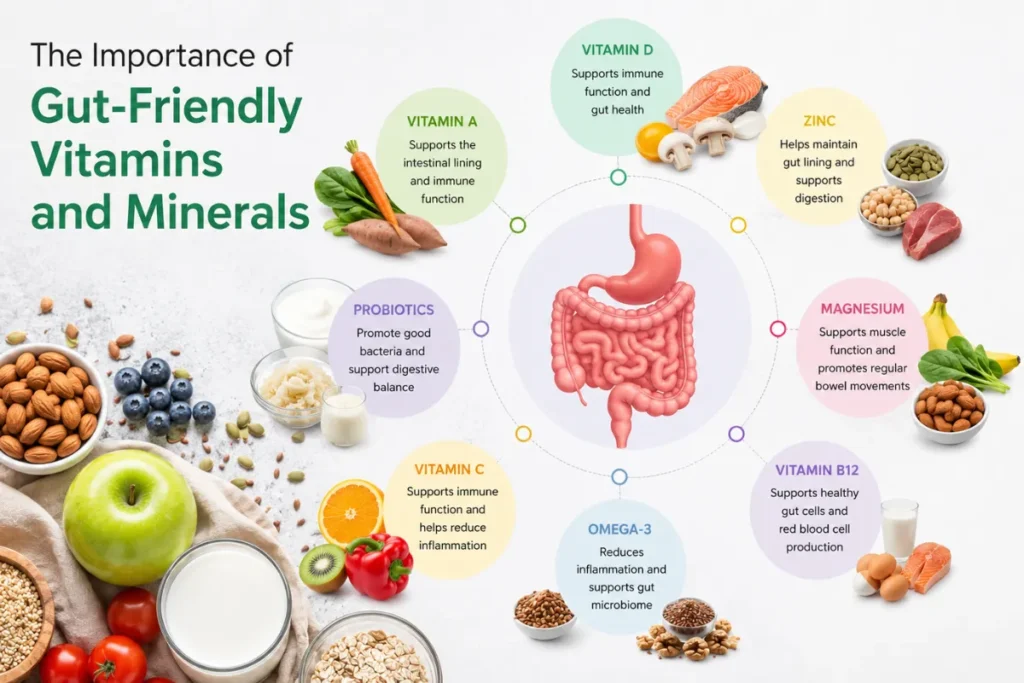
Several vitamins and minerals are important for normal body function, including processes that support digestive health.
Magnesium
Magnesium is involved in muscle and nerve function, including normal muscle activity within the digestive tract. Food sources include spinach, pumpkin seeds, almonds, and legumes.
B Vitamins
B vitamins support energy production and various metabolic processes in the body. They can be found in foods such as eggs, dairy products, whole grains, leafy greens, and lean meats.
Zinc
Zinc contributes to normal immune function and tissue maintenance. Food sources include shellfish, meat, legumes, seeds, and dairy products.
Vitamin D
Vitamin D plays an important role in immune function and overall health. Maintaining adequate vitamin D levels is important, although supplementation should be based on individual needs and medical advice rather than used as a general treatment for digestive symptoms.
Supporting the Gut Microbiome Through Food
The gut microbiome is influenced by diet and other lifestyle factors. A varied diet that includes a range of plant-based foods can help provide different types of fibre and other nutrients that support a diverse gut microbiome.
To support a healthy gut microbiome, consider including a variety of:
Prebiotic foods
These provide types of fibre and carbohydrates that can be used by certain gut bacteria. Examples include:
- Garlic
- Onions
- Bananas
- Oats
- Asparagus
- Leeks
Probiotic foods
These may contain live microorganisms. Examples include:
- Yoghurt with live cultures
- Kefir
- Sauerkraut
- Kimchi
- Miso
Not every probiotic or high-fibre food suits every person. People with IBS, reflux, bloating, or other digestive conditions may find that certain foods worsen their symptoms. Rather than following a one-size-fits-all approach, it is important to consider individual tolerance and seek professional advice when symptoms are persistent or severe.
Foods That Commonly Support Better Digestion
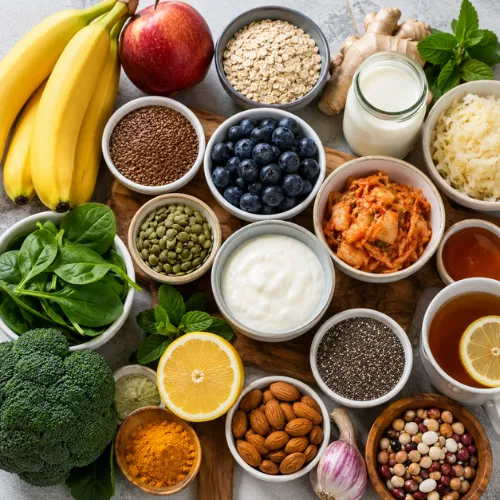
When people ask about the best foods for digestive health, there is rarely one food that works for everyone. A varied and balanced eating pattern is generally more useful than focusing on a single “superfood.”
Examples of nutritious everyday choices include:
- Oats as a source of fibre
- Yoghurt if dairy is well tolerated
- Bananas as a convenient fruit option
- Cooked vegetables if softer foods are easier to tolerate
- Lentils and beans in appropriate portions
- Ginger, which may be helpful for some people experiencing mild nausea
- Papaya and kiwi as fruit options that provide fibre
- Whole grains instead of highly refined grains
- Soups and stews when softer meals are preferred
Eating slowly, chewing food thoroughly, and avoiding very large meals may also support comfortable digestion for some people.
A Practical Daily Approach to Digestive Nutrition
A healthy approach to digestive nutrition does not necessarily need to be restrictive or complicated. Consistent healthy eating habits are generally more sustainable than extreme diets.
A practical daily structure may include:
- Start the day with a balanced breakfast that includes fibre and protein
- Avoid regularly skipping meals if this contributes to digestive discomfort
- Include vegetables in meals where tolerated
- Choose fruit or other minimally processed snacks
- Drink fluids regularly throughout the day
- Limit very greasy, heavily processed, or late-night meals if they trigger symptoms
- Moderate alcohol intake
- Pay attention to foods that consistently trigger digestive discomfort
If you have IBS, reflux, chronic bloating, or persistent bowel changes, general dietary advice may not address the underlying cause. Persistent or recurring symptoms should be evaluated by a qualified healthcare professional.
Conclusion
Good digestive health often starts with simple nutritional habits followed consistently. Fibre, adequate hydration, balanced meals, and a varied diet can all contribute to normal digestive function and overall wellbeing.
When it comes to nutrition for digestive health, sustainable and balanced dietary habits are generally more practical than quick fixes or overly restrictive diets. However, if you continue to experience bloating, reflux, constipation, abdominal discomfort, or other digestive symptoms despite maintaining healthy nutritional habits, it is important to seek medical evaluation to identify the underlying cause.